


The sumo technique “Saka-Tottari” (逆とったり) is a rare twisting move where the defending wrestler reverses control by countering the opponent’s attack. At the very moment the opponent grabs their arm, the defending wrestler twists their body and turns the momentum around to throw the attacker down. This move requires exceptional body awareness and instantaneous judgment and is rarely seen in sumo matches. In this article, we explain its meaning, how it works, where it’s used, and its safety considerations in a way that’s easy to understand for beginners and international fans alike.
What is Saka-Tottari (逆とったり)?
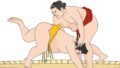
Saka-Tottari is a technique used to counter the move “Tottari,” where a wrestler grabs the opponent’s arm and pulls them forward to unbalance and throw them. In contrast, Saka-Tottari reverses this—the wrestler being attacked twists their body just as their arm is grabbed and uses the opponent’s momentum against them.
In this sense, it’s a technique where the defender suddenly shifts to offense, making it a true reversal maneuver.
Here is a table summarizing the difference between Tottari and Saka-Tottari:
| Technique | Who Leads? | Key Movement | Difficulty | Frequency |
|---|---|---|---|---|
| Tottari | Attacking side | Grab opponent’s arm and pull forward | Medium | Occasionally |
| Saka-Tottari | Defending side | Twist body as arm is grabbed to reverse attack | High | Extremely Rare |
Technical Structure of Saka-Tottari
The essence of Saka-Tottari lies in reaction speed and anticipation. Rather than resisting force with force, the defender redirects the opponent’s energy to throw them. For the move to succeed, the following conditions must be met:
| Key Element | Description |
|---|---|
| Reaction Speed | Instantly responding the moment the arm is grabbed |
| Core Strength | Twisting body without losing balance |
| Footwork | Rapid foot adjustments to maintain posture |
| Visual Tracking | Reading the opponent’s motion and shifting accordingly |
By combining these skills, the wrestler can seamlessly shift from defense to offense. This move demands not only physical finesse but also a sharp mental presence.
When is Saka-Tottari Used?
Saka-Tottari doesn’t work in all situations. It is most often used during high-pressure moments, such as when a wrestler is about to be forced out. Typical scenarios include:
| Situation | Details |
|---|---|
| Edge of the ring | Desperation leads to bold counterattacks |
| During Tottari attempt | Opponent overextends while trying to pull the arm |
| Under pressure | The defender takes a risk to break the opponent’s flow |
In these scenarios, the wrestler under attack may strategically reverse the momentum using Saka-Tottari.
Helping Beginners and Foreigners Understand
To make this technique more accessible to those unfamiliar with sumo, it helps to compare it to techniques in other martial arts and sports. The chart below shows similar concepts:
| Sport | Comparable Technique | Commonality |
|---|---|---|
| Judo | Counter throws like “Ura-nage” | Using the opponent’s force |
| Aikido | Wrist and breathing throws | Redirecting energy |
| Wrestling | Sprawl and roll techniques | Defending and countering |
These comparisons help demonstrate how Saka-Tottari shares universal combat principles of redirection and timing.
Risks and Safety Considerations
Because it involves complex body movements and momentum shifts, Saka-Tottari carries inherent risks. These include:
| Risk | Possible Outcome |
|---|---|
| Joint stress | Shoulder or elbow injury |
| Balance failure | Falling backward or sideways |
| Opponent injury | If they can’t break the fall |
As a result, this technique is often practiced only under strict supervision and is used in actual matches only by experienced wrestlers.
Tradition Meets Evolution in Saka-Tottari
Sumo is not only a contest of power—it’s a sport of technique and mental discipline. A move like Saka-Tottari represents this perfectly. It appears defensive at first but leads to a sudden and stunning reversal.
Though rooted in tradition, Saka-Tottari is evolving. As more international wrestlers enter the sport, some apply their backgrounds in judo or wrestling to develop unique applications of this technique.
This suggests that sumo is becoming increasingly diverse, and techniques like Saka-Tottari could play a growing role as both strategic tools and fan-favorite highlights.
Conclusion
Saka-Tottari embodies the depth and subtlety of sumo. Rather than overpowering the opponent, the wrestler uses judgment, timing, and skill to win.
Understanding this technique opens up new ways to enjoy the sport. For those new to sumo or unfamiliar with it, watching a match where Saka-Tottari is executed adds drama and fascination.
The true excitement of sumo lies not only in who wins, but how they win—and few techniques showcase that better than Saka-Tottari.

コメント