
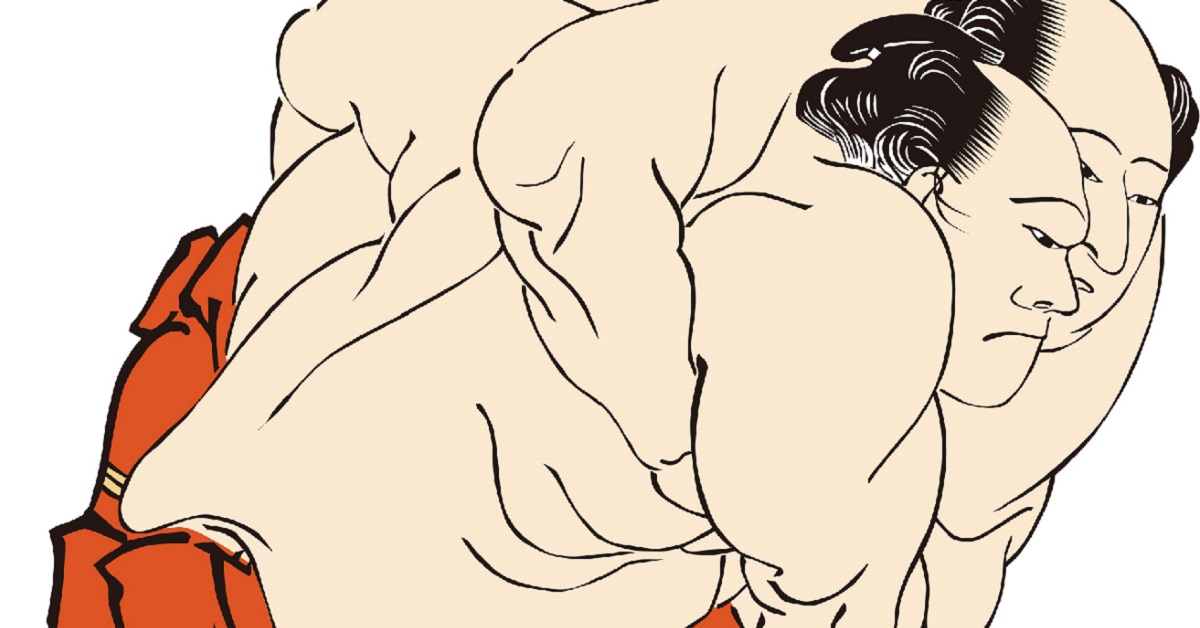

In sumo, “hanmi” refers to a body posture where the wrestler turns their body diagonally to avoid a direct head-on clash with the opponent. Far from being a mere stance, this posture plays a critical role in both offense and defense, serving as a core strategy in matches. This article clearly explains the meaning, purpose, and application of hanmi, especially for beginners and non-Japanese viewers, helping them to better enjoy the depth of sumo.
What is Hanmi?
The Basic Posture of a Diagonal Stance
In sumo, hanmi means angling the body to avoid facing the opponent squarely. This is not just a visual posture but a technical move to reduce the impact of an attack and prepare for counteraction. Facing the opponent head-on increases the risk of imbalance, but by angling the body, the wrestler can redirect the force and stay stable.
| Aspect | Description |
|---|---|
| Defense | Avoids the full impact of the opponent’s force |
| Offense | Easier transition into favorable grips and techniques |
| Psychological Effect | Induces hesitation or confusion in the opponent |
In this way, hanmi functions as a “silent weapon” that can shape the flow of a match based on subtle positioning.
How Hanmi Is Used
The Role of Hanmi at the Initial Clash
The tachiai, or the initial clash in a bout, is the most forceful moment. By adopting hanmi, a wrestler can deflect the opponent’s charge, controlling the rhythm of the match from the beginning.
| Situation | Effect of Hanmi |
|---|---|
| Immediately after tachiai | Absorbs impact, maintains balance |
| Against pushing-type wrestlers | Redirects force, allows for grip-based attacks |
| During close-range fights | Reduces vulnerability and opens timing for attacks |
Especially against pushers, hanmi is highly effective. Wrestlers with strong lower-body balance and flexibility tend to use this stance more effectively.
Types of Hanmi and Wrestler Preferences
Connection Between Gripping Style and Hanmi
Each wrestler has a different way of using hanmi depending on their preferred grip or technique. For example, those who favor a right-hand inside grip often use a stance with the right shoulder slightly forward, while the opposite applies to left-hand dominant wrestlers.
| Type of Hanmi | Characteristics | Matching Techniques |
|---|---|---|
| Right hanmi | Right shoulder forward | Right uwatenage, right yotsu |
| Left hanmi | Left shoulder forward | Left uwatenage, left yotsu |
| Mid hanmi | Shallow angle stance | Flexible reactions |
Veteran wrestlers often adjust the angle of hanmi in real time, using it as a fluid technique rather than a fixed posture.
What Beginners and Foreigners Should Watch For
Observing Hanmi During Matches
For beginners and foreign fans, learning about hanmi is key to appreciating sumo more deeply. That’s because a wrestler’s body angle directly influences how the match unfolds.
| Match Moment | Role of Hanmi |
|---|---|
| At tachiai | Sets up rhythm by redirecting momentum |
| During pushing exchanges | Allows for evasive maneuvers near the ring’s edge |
| In grappling battles | Maintains space for strategic movement |
By noticing which shoulder is forward, or how the wrestler manages distance, viewers can uncover the hidden strategies behind each movement. Sumo is not just brute force—it is a battle of skill and mind.
Hanmi and Practice
Mastering the Stance Through Daily Training
The skill of hanmi is developed through constant practice. Wrestlers learn through repetition how to absorb pressure, maintain balance, and control their spacing. It’s not something that can be understood conceptually alone—it must be ingrained in the body.
Some wrestlers even avoid overly deep hanmi, opting instead for a moderate angle that allows more versatility, tailoring it to their own fighting style.
| Training Focus | Objective |
|---|---|
| Core stability | Remain unshaken even under pressure |
| Distance control | Maintain ideal spacing for attacks |
| Reading movement | Predict and adjust to opponent behavior |
In top-level matches, split-second decisions influenced by practice determine success or failure—and hanmi is often at the center of those decisions.
Techniques That Work With Hanmi
Linking Hanmi to Specific Attacks
Hanmi naturally flows into many sumo techniques, especially throws and evasive maneuvers. Without proper posture and body angle, these techniques are hard to execute effectively.
| Technique | Synergy with Hanmi |
|---|---|
| Uwatenage (Overarm throw) | Weight shifts in direction of grip for leverage |
| Shitatenage (Underarm throw) | Pulls and rotates opponent from diagonal angle |
| Inashi (Deflection) | Uses hanmi to avoid force, then counterattacks |
Foot positioning, hip alignment, and eye contact all contribute to a successful hanmi. It’s a total-body movement, not just turning the torso.
Conclusion
Hanmi Unlocks the True Depth of Sumo
In sumo, hanmi is not just a stance—it is a fusion of strategy, psychology, and technique. Understanding it allows fans to see the artistry behind each movement.
For beginners and international viewers, recognizing hanmi and its effects can transform how matches are perceived. You begin to notice the intentions, the traps, and the subtle changes in posture that define victory.
Sumo is not just a test of strength—it is a form of intellectual and physical combat. Watching with hanmi in mind reveals a richer, deeper world where every movement is a calculated step in an ancient chess game played with bodies.
コメント